War with Iran and the Threat of a Global Food Crisis
The conflict with Iran is escalating in the Middle East, while farmers in Africa, Asia, and Latin America suddenly realize they have nothing to fertilize their fields with.
And yes, that’s no exaggeration. Experts are blunt: war could trigger a chain reaction that will hit the plates of millions of people around the world.
It all starts with a common fertilizer—urea. This is the essential nitrogen “vitamin” for plants, without which crop yields plummet.
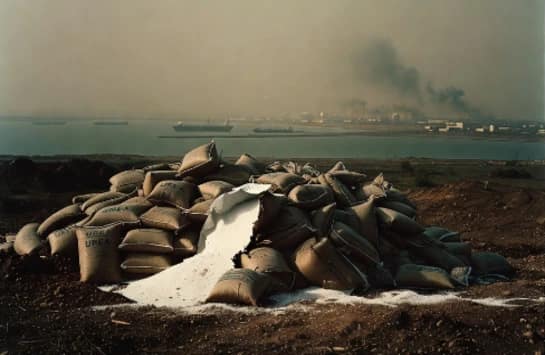
It’s this very urea supply that is currently in serious question. Analysts at Kpler, who track maritime cargo in real time, are sounding the alarm: of the 2.1 million tons of urea that were supposed to hit the market, almost half is simply “stuck.”
More than 1.1 million tons are sitting idle in Persian Gulf ports. Ships are stuck, contracts are falling through, and fields around the world are waiting.
But that’s not the whole story. The second time bomb is natural gas. It’s used to produce ammonia and then nitrogen fertilizers.
As soon as the escalation began in the Middle East, gas prices skyrocketed. Asian factories, which had previously been running around the clock, began shutting down production one after another.
And now the most interesting part: geography. The Middle East isn’t just about oil. It’s also one of the world’s main fertilizer and energy hubs.
Almost a third of all urea exports worldwide go through the Strait of Hormuz. Remember how Iran blocked it before? History repeats itself.
And the results were immediate: since the conflict began, the price of urea has risen by more than 40%. Farmers in India, Brazil, and even Europe are already feeling the impact.
And then comes rising prices for wheat, corn, and rice… and, as a result, empty store shelves and famine in the most vulnerable regions.
The world is too dependent on the bottleneck in the Persian Gulf. One serious supply disruption and we’ll face a food crisis that will affect several continents at once.
What should we do? Perhaps now is the time for governments and businesses to seek alternative routes, invest in local fertilizer production, and develop green technologies.
We already experienced something similar in 2022—and we survived. But then, there was one factor, while now there are several: gas, logistics, and politics.
Source: Financial Times.
We previously examined recent claims by historian Anthony Gleese, who warns that World War III may have already begun. Three clear signs point to this in 2026.